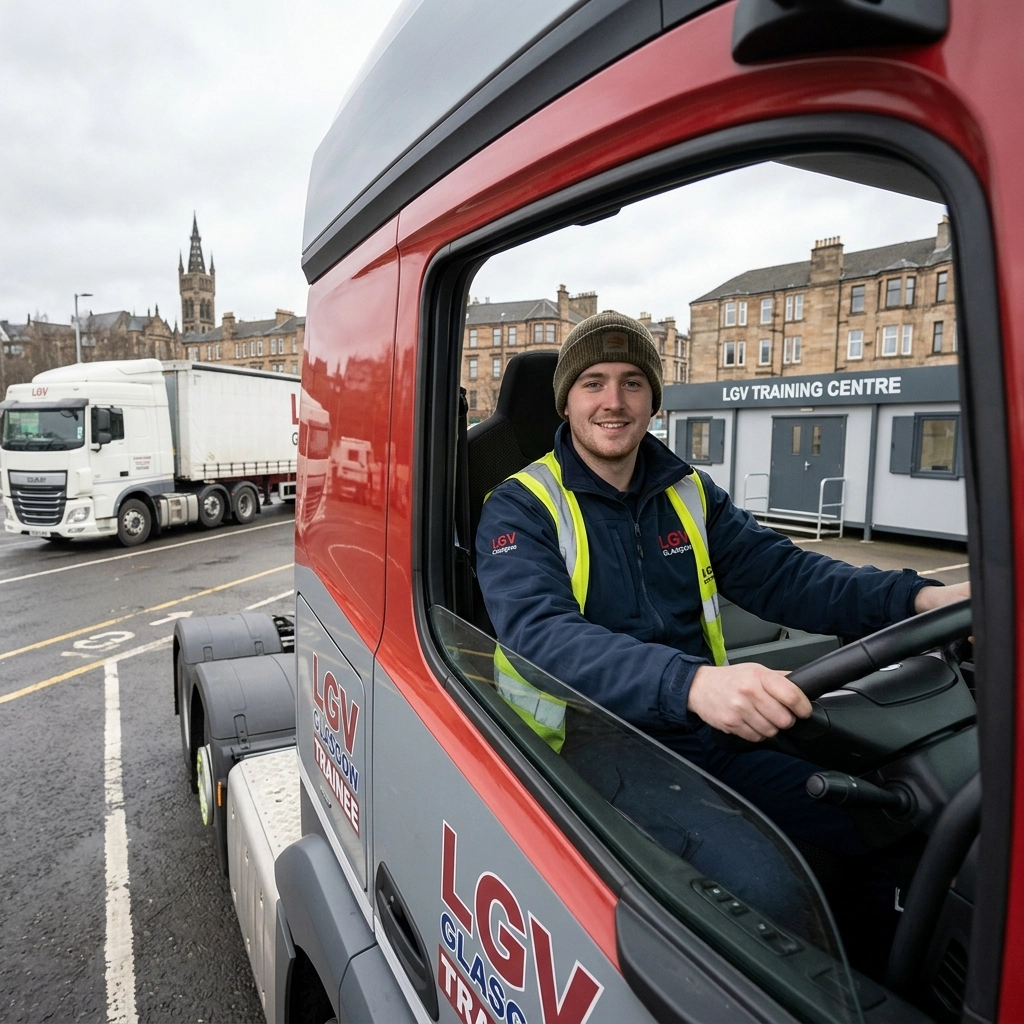
So, you’re thinking about a career change? Maybe you’re tired of the same four walls, or perhaps you’ve always looked at those massive rigs on the M8 and thought, "I could do that." Whatever your reason, you’ve picked a fantastic time to look into hgv training glasgow. The logistics industry is the backbone of Scotland’s economy, and Glasgow is its beating heart.
In this guide, we’re going to break down everything you need to know about starting an lgv course, getting your foot in the door, and eventually earning the kind of salary that makes those early mornings worth it. From understanding the difference between Class 1 and Class 2 to navigating the "alphabet soup" of CPC modules, we’ve got you covered.
Why Glasgow is the Place to Be for LGV Drivers
Glasgow isn't just a city; it’s a massive logistics hub. With the M8, M74, and M77 all converging here, we are perfectly positioned to feed the rest of Scotland and the UK. Whether it’s hauling goods up to the Highlands or trunking down to the Midlands, Glasgow-based drivers are always in demand.
Currently, the market is looking very healthy. New or junior LGV drivers in Scotland can expect to start around £27,000+. Once you’ve got some miles under your belt, established Class 2 roles in Glasgow often sit between £35,000 and £40,000. If you decide to go for the big rigs: the Class 1 (Category C+E): you could be looking at hourly rates between £14.74 and £22.13, with top-end experienced drivers reaching £47k+ with overtime.
Decoding the Jargon: LGV vs. HGV
Before we get into the "how-to," let’s clear up the "what." You’ll hear people use LGV (Large Goods Vehicle) and HGV (Heavy Goods Vehicle) interchangeably. In the UK, they mean the same thing. However, the categories on your license are what really matter:
- Category C (Class 2): These are rigid vehicles over 7.5 tonnes. Think of your standard supermarket delivery trucks or local waste management lorries.
- Category C+E (Class 1): These are the big articulated lorries (the ones with the "cab" and the "trailer"). This is where the higher pay grades usually sit.
If you're starting from scratch, you can check out our Category C options or jump straight into the big leagues with Category C+E training.
Step 1: Checking Your Eligibility
Before you "take the bull by the horns" and sign up for an lgv glasgow course, you need to make sure you meet the basics. To get started, you generally need:
- A full UK car license (Category B).
- To be at least 18 years old.
- A reasonable standard of spoken and written English.
- A clean-ish record (usually no more than 6 penalty points).
If you’ve got major endorsements like a DD or DR (drink/drug driving), it might be worth having a chat with us first to see how that affects your employability.

Step 2: The Medical and Provisional License
You can't just hop into a truck and start driving. Your first real "smart move" is getting your medical sorted. A doctor (either your GP or a private specialist) will need to fill out a D4 medical form, checking things like your eyesight and blood pressure. Once that’s done, you send it off to the DVLA along with your D2 application form to get your provisional entitlement.
At HGV Training Glasgow, we often help our students navigate this paperwork because, let’s be honest, DVLA forms aren't exactly light reading.
Step 3: Nailing the Theory
While you wait for your license to come back, it’s time to hit the books. For professional driving, you need to pass three main parts:
- Module 1a: Multiple-choice questions.
- Module 1b: Hazard perception.
- Module 2: CPC Case Studies.
Don't let the "test" part put you off. With the right hgv courses scotland, you’ll have all the study materials you need to pass with flying colors.

Step 4: Practical Training – The Fun Part
This is where you finally get behind the wheel. You’ll spend time with an instructor learning how to handle a vehicle that’s significantly larger than your Vauxhall Corsa.
In Glasgow, we have a mix of tight urban streets and fast dual carriageways, giving you a well-rounded experience. Your practical training will culminate in:
- Module 3: The practical driving test (on-road driving and reversing maneuvers).
- Module 4: The Practical CPC (Demonstration test), where you show you know how to secure a load and do your daily safety checks.
We pride ourselves on our modern fleet of training vehicles, ensuring you’re learning on equipment that’s actually used in the industry today.

Step 5: Finding Your First Job in the Central Belt
Once you’ve passed (congrats!), you’ll receive your Driver Qualification Card (DQC). Now the real adventure begins. Glasgow is home to some massive employers and agencies.
When looking for work, keep an eye out for "New Pass Welcome" ads. Many local companies in construction, waste management, and retail logistics are happy to take on fresh drivers and give them the "on-the-job" experience they need. Check out sites like Indeed or specialized transport agencies in the city.
Penny’s Pro Tip: Don't be afraid to start with agency work. It’s a great way to try out different types of driving: like multi-drop, trunking, or even bus training if you fancy a change of pace: to see what suits you best.
Life on the Road: What to Expect
Let’s be real: being an LGV driver isn't just about sitting and steering. It’s a lifestyle.
- Early Starts: You might be clocking in at 4:00 AM to beat the rush hour traffic on the Kingston Bridge.
- Regulations: You need to be a master of the Tachograph. Understanding your driver’s hours and the Working Time Directive is vital. Breaking these rules isn't just a "slap on the wrist"; it’s your license and your livelihood on the line.
- Independence: If you love being your own boss for most of the day, you’ll love this job. No one is looking over your shoulder; it’s just you, the road, and your favorite podcast.

Future-Proofing Your Career
Getting your Category C or C+E license is just the starting line. Once you’re comfortable, you can specialize to increase your earning potential even further:
- ADR: For carrying dangerous goods (like fuel or chemicals).
- HIAB: Learning to operate a lorry-mounted crane: huge for the construction industry in Glasgow.
- Alternative Fuels: With the world going green, understanding alternative fuel vehicles is a very smart move for the future.
If you eventually want to step out of the cab, you could even look into becoming a Transport Manager. The sky is the limit once you have that base qualification.
Why Choose HGV Training Glasgow?
We know you have choices when it comes to an lgv course. But here’s the thing: we’re local, we’re friendly, and we genuinely care about getting you into work. Our owner, David Patterson, has built this company on the idea that training should be accessible and high-quality.
We don't just teach you how to pass a test; we teach you how to be a professional driver. From our pricing transparency to our hands-on support with CPC training, we’re with you every step of the way.
Ready to Get Started?
The road to a new career is wide open. Whether you’re looking for a Class 2 rigid job or want to go all the way to Class 1, there’s never been a better time to start your journey in Glasgow.
If you’ve got questions about the process, the costs, or how long it takes, head over to our FAQs page or, even better, give us a shout directly. We love talking shop and helping people figure out their next move.
Don't wait for the "perfect" time: it doesn't exist. Take control of your professional future today.