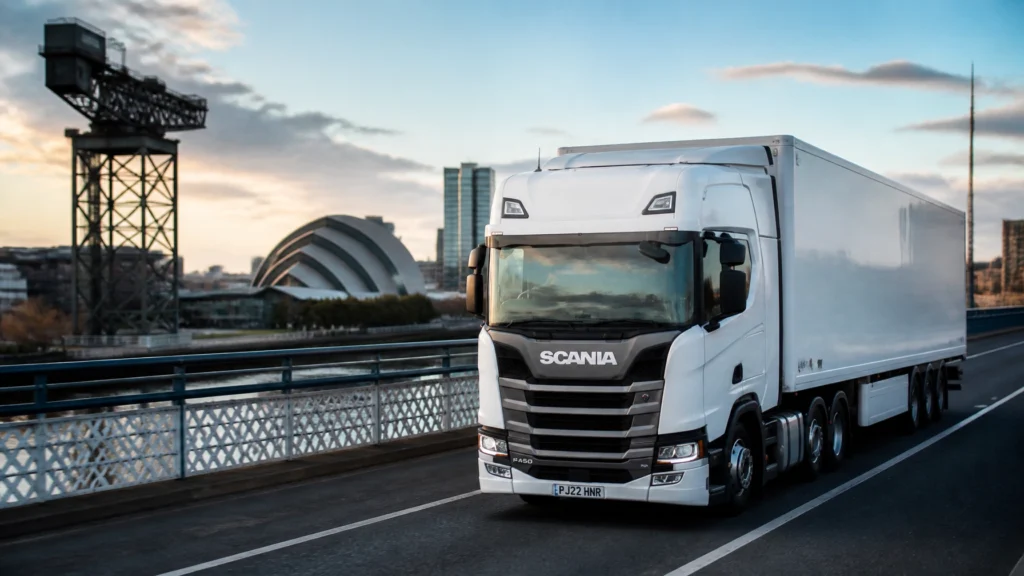
If you have spent any time scrolling through job boards or listening to the chatter in roadside cafes lately, you have probably heard two very different stories about the HGV industry in Scotland. On one hand, you have the "experts" claiming the driver shortage is over and wages are stagnating. On the other, you see glossy adverts promising £50,000 salaries for a few days' work a week.
So, what is the reality? Especially here in the West of Scotland, where the M8 serves as the pulsing artery of our economy?
The truth is somewhere in the middle, but there are "secrets" to the Glasgow market that seasoned drivers rarely share with the newcomers. If you are looking to get on the road to a new career, understanding the local landscape: from the actual take-home pay to the shift patterns that pay the best: is vital. This isn't just about driving a big rig; it’s about navigating the professional infrastructure of 2026 to ensure you are earning every penny you’re worth.
The Glasgow Salary Reality: Class 1 vs. Class 2
Let’s talk numbers first, because that’s why you’re here. When you start looking for an lgv course, your first big decision is whether to go for Category C (Class 2) or jump straight to Category C+E (Class 1).
In 2026, the Glasgow market has stabilized after the wild fluctuations we saw a few years back. For a standard 40-hour week, here is what the data actually shows for our local area:
- Category C (Class 2): You are looking at a typical salary range of £27,000 to £33,000. These roles are often multi-drop, meaning you’re in and out of the cab, often staying within the Greater Glasgow area or heading through to Edinburgh.
- Category C+E (Class 1): This is where the ceiling lifts. A standard hgv courses scotland graduate can expect to start between £32,000 and £42,000. If you land a "trunking" role (driving from depot to depot with no manual unloading), you’re at the higher end of that scale.
However, here is the secret: the "experts" often quote the base salary. In Glasgow, the real money is made in the "add-ons." Night shift premiums can add an extra £3 to £5 per hour, and weekend overtime is often paid at time-and-a-half or double-time. A savvy driver in Glasgow can easily pull in £45,000+ by simply choosing the right shift patterns.

Secret #1: The Central Belt "Golden Triangle"
If you live in Glasgow, you are sitting in the middle of a logistics goldmine. The area between Glasgow, Motherwell, and Grangemouth is often referred to by industry insiders as the "Golden Triangle" of Scottish haulage.
This is why hgv training glasgow is such a smart move right now. Because of the devolved administration’s focus on Scottish infrastructure, massive investment has been poured into the Eurocentral and Newhouse hubs. Many national firms have their Scottish headquarters here.
The secret? These hubs are perpetually competing for drivers. While a driver in the Highlands might be stuck with one local employer, a Glasgow-based driver has dozens of options within a 15-mile radius. This competition keeps the hourly rates higher here than in almost any other part of Scotland. If you aren't happy with your pay, you don't have to move house; you just have to move to the next depot.
Secret #2: The Certification Game
One thing the experts don't always emphasize is that your license is just the "entry ticket." To get the top-tier salaries that people brag about on social media, you need to specialize.
For instance, taking an lgv glasgow course is great, but adding an ADR (Dangerous Goods) certificate can instantly add £2,000–£4,000 to your annual earning potential. Fuel tankers and chemical transport pay a massive premium because the safety requirements are so stringent.
Similarly, getting your HIAB (lorry-mounted crane) ticket is a game-changer for Class 2 drivers. Construction companies in the West of Scotland are crying out for HIAB drivers to deliver materials to the endless new housing developments in Renfrewshire and Lanarkshire. It’s less driving, more technical skill, and significantly more pay.

Secret #3: Why "The Shortage" Still Exists (For You)
You might hear people say, "The driver shortage is over." This is a half-truth. What they actually mean is that the desperate shortage of any warm body behind a wheel has eased. However, there is still a massive shortage of reliable, well-trained professional drivers.
This is where your choice of training provider becomes a vital decision. Employers in Glasgow know which schools produce "steering wheel attendants" and which schools produce "professional drivers." At HGV Training Glasgow, we focus on the latter. Our instructors aren't just teaching you to pass a test; they are preparing you for the reality of the M8 at 8:00 AM on a rainy Monday.
High first-time pass rates and DVSA-registered status aren't just badges of honor; they are your guarantee that you are entering the market with the skills that command the top-tier salaries.
Navigating the Costs: Investing in Yourself
I know what you're thinking: "This sounds great, but how much is this going to cost me?" It’s easy to look at pricing and feel a bit of sticker shock. But let’s take the bull by the horns and look at the Return on Investment (ROI).
If you are currently in a retail or warehouse role earning £22,000, and an HGV Class 1 license costs you roughly £2,000 to £3,000 (including medicals and theory), you could see a pay jump of £10,000 to £15,000 in your very first year. There are very few other career paths where you can pay back your entire training cost in less than three months of working.
The "Secret" Path to Success
If you want to maximize your salary from day one, here is the roadmap we suggest to our students:
- Don't wait: The demand for drivers in Scotland is seasonal, but the training queue stays long. The best time to start was yesterday; the second best time is today.
- Get your Medical and Theory out of the way: You can't get in a truck until these are done. We help you with study materials to make sure you breeze through the cpc case studies.
- Go for Class 1 if you can: While Class 2 is a great starting point, the salary gap is widening. Most modern employers prefer to hire Class 1 drivers even for Class 2 work because it gives them more flexibility.
- Network at the Depot: Glasgow's haulage community is tight-knit. Your instructor often knows who is hiring before the job even hits Indeed.

Is Bus Training a Better Move?
Sometimes people ask us about bus training instead. While the "secrets" of HGV salaries are tempting, bus and coach driving in Glasgow offers a different kind of stability. The pay is slightly lower on average (around £28k-£32k), but the benefits, such as free travel for families and very structured shift patterns, are a huge draw for those who want a better work-life balance. It really depends on what you value more: the high-ceiling salary of a Class 1 driver or the community-focused role of a bus driver.
Taking the Next Step
The road to a new career doesn't have to be a mystery. The "experts" might want to keep the best routes and the highest-paying contracts to themselves, but the reality is that there is plenty of room for new, motivated drivers in Glasgow.
Whether you are looking for an lgv course to get your Category C or you're ready to take on the challenge of a Class 1 license, the opportunity is sitting right there on your doorstep. Don't let another year pass by in a dead-end job.
Take control of your professional future. Get in touch with us at HGV Training Glasgow, and let's get you behind the wheel. The M8 is waiting.
