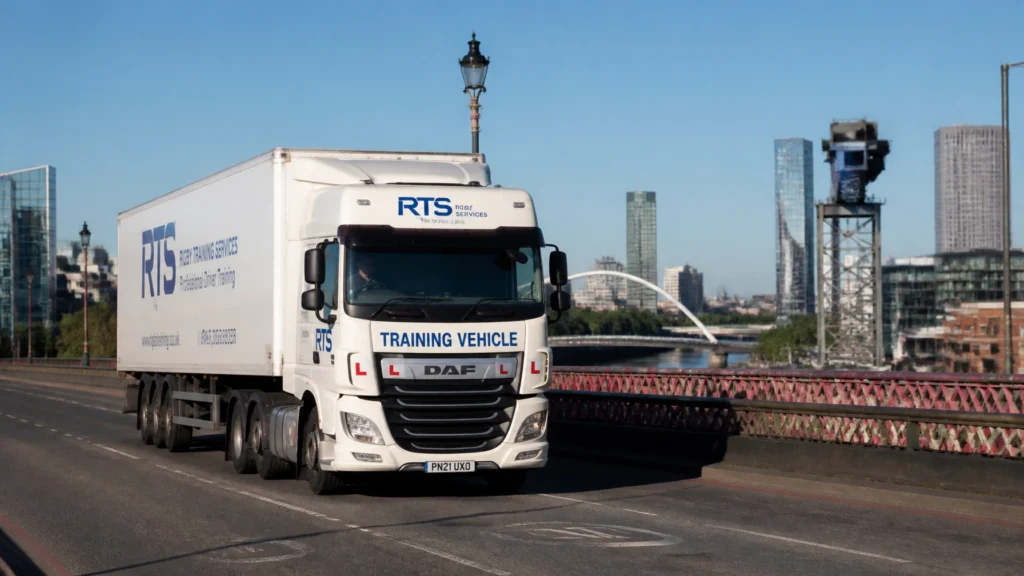
So, you’ve decided to take the bull by the horns and steer your career toward the open road? Smart move. Whether you’re looking to escape the monotony of a 9-to-5 desk job or you’re a van driver ready to step up to the big leagues, getting your HGV licence in Scotland is one of the most stable and rewarding career shifts you can make.
Glasgow is the beating heart of Scotland’s logistics network. From the busy lanes of the M8 to the sprawling industrial hubs in Lanarkshire, the demand for skilled drivers is through the roof. But let’s be honest: staring at a 44-tonne artic for the first time can be a bit daunting. That’s why we’ve pulled together 20 pro tips to help you navigate everything from your first medical assessment to passing your hgv training class 1 test with flying colours.
1. Don’t "DIY" Your Medical Assessment
Before you can even sit in the cab, you need to prove you’re fit for the road. The D4 medical form is a vital first step. While you can technically go to your GP, they often charge a premium and can have long waiting lists. We recommend using a specialized driver medical provider. It’s faster, cheaper, and they know exactly what the DVLA is looking for regarding eyesight and blood pressure.
2. Get Your Paperwork in Order Early
You’ll need to apply for your provisional HGV entitlement using the D2 and D4 forms. Don’t wait! The DVLA can be a bit of a maze, and the last thing you want is your training being delayed because of a missing signature. Once you have that provisional entitlement on your licence, you’re officially on the road to a new career.
3. Treat the Theory Test Like a Professional Exam
The theory test isn't just about road signs; it’s about vehicle weights, bridge heights, and rest periods. It’s broken into two parts: Multiple Choice and Hazard Perception. Take it seriously. Use official DVSA apps and study in short, 20-minute bursts to keep the information fresh.

4. Master the "Three-Click Rule" for Hazard Perception
Hazard perception in an lgv course is different from the car test. You’re looking for developing hazards. If you see a pedestrian walking toward the kerb, click once. If they reach the kerb, click again. If they step out, click a third time. This ensures you catch the scoring window without being flagged for "machine-gunning" the mouse.
5. Think Like a Manager for Module 2
The CPC Case Studies (Module 2) test your ability to handle real-world scenarios. It’s not just about driving; it’s about documentation, load security, and border crossings. When answering, ask yourself: "What is the safest and most professional way to handle this?"
6. Choose a Local Glasgow Training Hub
Why travel miles when some of the best training happens right here? Choosing hgv training glasgow means you’ll be learning on the very roads you’ll likely be working on. Navigating the Charing Cross interchange or the Baillieston roundabout during training gives you a massive advantage when it comes to test day.
7. Decide Between Class 1 and Class 2
Do you want to drive "rigids" (Class 2/Category C) or "artics" (Class 1/Category C+E)? While many start with class 2 hgv training, you can now go straight to Class 1. If you aim for the big 44-tonne long-haul jobs, Class 1 is your goal. However, Class 2 is fantastic for local multi-drop work.
8. The "Walkaround" Check is Your Best Friend
On your practical test, you’ll be asked to demonstrate a vehicle safety check. Don’t rush this. Develop a clockwise routine: lights, tyres, mirrors, suzie cables (for Class 1). If you miss a "major" like a loose wheel nut, the test is over before you’ve even moved.
9. Master the "S" Shape Reversing Maneuver
Reversing a massive vehicle into a tight bay is the part that keeps most trainees awake at night. The secret? Small steering inputs and slow speed. If you’re doing hgv training class 1, remember that the trailer reacts the opposite way to your steering. Take your time: you are allowed to get out and check your position!
10. Mind the "Swing"
In a Class 1 vehicle, your trailer won't follow the exact path of your cab. On Glasgow’s tighter corners, you need to "swing" wide to ensure your rear wheels don't clip the kerb. It feels counter-intuitive at first, but your instructor will show you exactly how to judge the space.

11. Mirrors, Mirrors, and More Mirrors
In a car, mirrors are important. In an HGV, they are your lifeblood. You have massive blind spots. Get into the habit of checking your mirrors every few seconds, especially before changing lanes or approaching a roundabout. Examiners love to see "active" observation.
12. Use "Commentary Driving"
If you’re feeling nervous, talk out loud to the examiner. "I’m checking my left mirror for cyclists… I’m slowing down because I see the traffic lights ahead are changing." It proves you’re aware of your surroundings and helps keep your brain focused on the task at hand.
13. Respect the M8
The M8 through Glasgow is one of the busiest motorways in Europe. Learning to merge safely and maintain a professional following distance is vital. Remember, an HGV doesn't stop on a sixpence. Keep your distance and plan your exits early.
14. Don’t Ignore Load Security (Module 4)
Getting your hgv licence scotland isn't just about driving. The Module 4 practical demonstration covers how to secure a load. Whether it’s using ratchets, chains, or tensioners, you need to show you can prevent your cargo from shifting. A loose load is a dangerous load.
15. Stay Calm on Test Day
It sounds cliché, but the examiner isn't looking for perfection; they’re looking for safety. If you make a minor mistake, don't dwell on it. Take a breath and keep driving professionally. Many students pass with a few "minors" as long as they didn't do anything dangerous.
16. Keep Your CPC Up to Date
Once you have your licence, the learning doesn't stop. You need to complete 35 hours of CPC periodic training every five years to keep your Driver Qualification Card (DQC) valid. It’s a legal requirement, so keep an eye on your hours.
17. Learn the Tachograph Rules
Your tachograph is the "black box" of the trucking world. It records your driving hours, breaks, and rest periods. Infringements can lead to heavy fines for both you and your employer. Take the time to understand the "4.5 hours driving/45 minutes break" rule inside out.
18. Prioritize Your Health
Driving for long periods can take a toll. Invest in a good ergonomic seat position, stay hydrated, and try to avoid the "greasy spoon" diet. A healthy driver is a more alert and safer driver.
19. Leverage Local Job Assistance
The beauty of training with a reputable school in Glasgow is the industry connections. We don’t just help you pass; we help you get hired. The central belt is full of haulage firms crying out for reliable new drivers. Don't be afraid to ask about our job assistance programs.

20. Just Start Today!
The biggest hurdle is often just making the first phone call. With high pass rates and a massive shortage of drivers, there has never been a better time to look into hgv courses scotland.
Your Future is on the Horizon
At HGV Training Glasgow, we pride ourselves on turning nervous beginners into confident professionals. Our DVSA-registered instructors have years of experience navigating the complexities of the haulage industry, and they’re ready to guide you through every step of the process.
Ready to trade your office chair for a driver’s seat? Whether it’s Category C or the full C+E experience, we’ve got the tailored lesson plans to get you there. Contact us today and let’s get you on the road to a career that actually moves you.