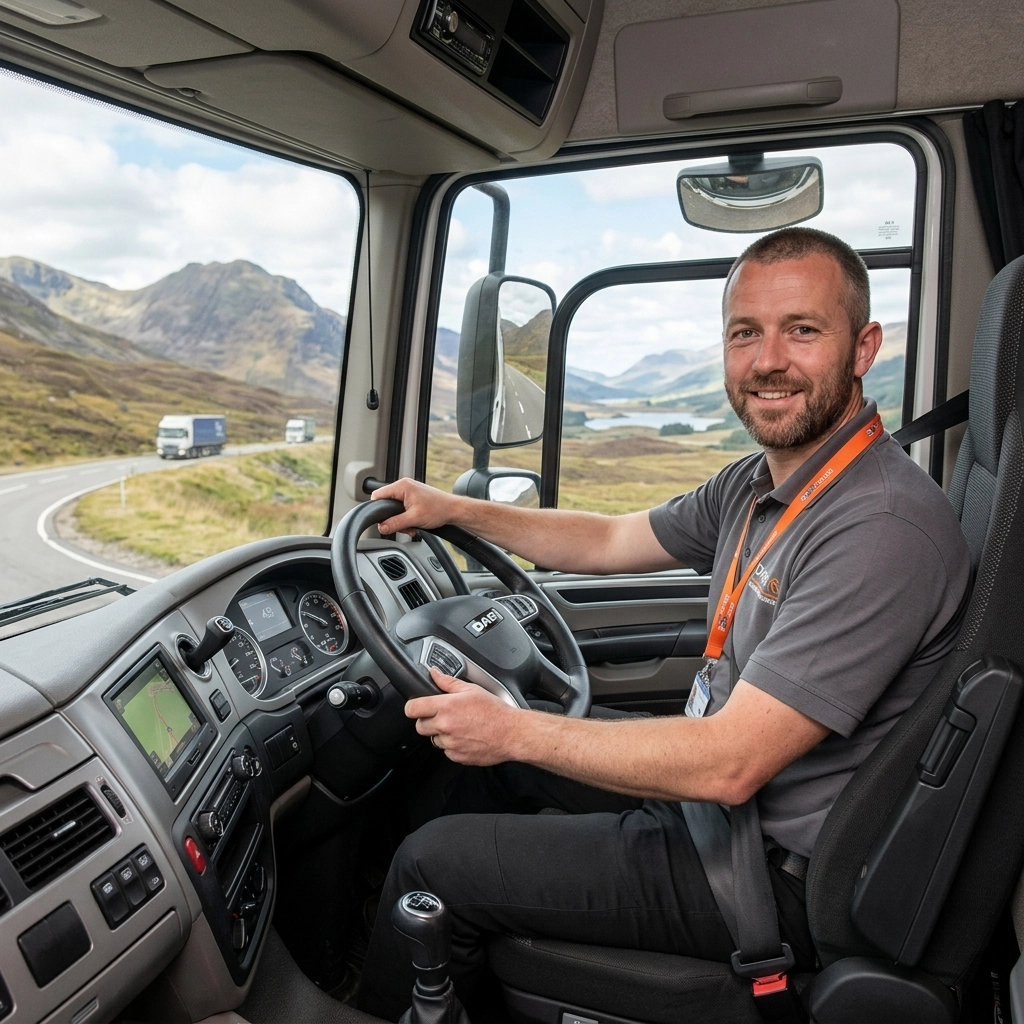
So, you’re thinking about trading in the office cubicle for the open road? Or maybe you’re already behind the wheel of a van and realized that the real earning potential lies in those massive rigs you see cruising down the M8. Whatever your motivation, you’ve come to the right place. At HGV Training Glasgow, we’re not just about passing tests; we’re about launching careers.
Scotland’s economy relies heavily on the haulage industry. From the bustling ports of Grangemouth to the supermarket shelves in Inverness, everything moves by truck. This creates a massive demand for skilled drivers. If you’ve been looking for a "recession-proof" career, you’ve found it. But how do you get started? This guide will walk you through every twist and turn of HGV courses Scotland has to offer, ensuring you have the map you need to succeed.
Why Choose a Career in HGV Driving?
Before we dive into the technicalities of an lgv course, let’s talk about the "why." Driving professionally isn't just about steering a big vehicle; it’s about freedom, responsibility, and, let’s be honest, a very decent paycheck.
In Scotland, a newly qualified Class 2 driver can expect to earn between £28,000 and £35,000. Step up to Class 1, and you’re looking at £35,000 to £45,000+, especially if you’re doing long-haul or specialized work. Beyond the money, there’s a sense of pride in keeping the country moving. Plus, with modern cabs equipped with high-tech nav systems, ergonomic seats, and even beds, the "lifestyle" has never been better.
Understanding the License Categories
Navigating the different license types can feel like reading a bowl of alphabet soup. Let’s break down the main categories you’ll encounter during your hgv training glasgow.
Category C1 (7.5 Tonne)
This is often the entry point for those looking to drive smaller delivery trucks or ambulances. If you passed your car test before 1997, you might already have this, but for everyone else, it requires a specific test. It’s a great way to get your feet wet in the world of logistics.
Category C (Class 2 / Rigid)
This is the most common starting point for professional drivers. A Category C license allows you to drive vehicles over 3,500kg with a trailer up to 750kg. Think of your standard supermarket delivery truck. Why a Category C licence opens up job opportunities is a question many ask, and the answer is simple: it’s the backbone of local haulage.
Category C+E (Class 1 / Articulated)
This is the big leagues. With a Class 1 license, you can drive articulated lorries (the ones where the trailer detaches). These are the giants of the motorway. Most drivers start with Class 2 and then upgrade, though "direct access" to Class 1 is now a popular and faster route to high-paying jobs.
Category D & D1 (Bus Training)
Interested in passenger transport instead of freight? Our bus training programs cover Category D (full-size buses) and D1 (minibuses). It’s a different vibe: dealing with people instead of pallets: but equally rewarding.

The Road to Qualification: A Step-by-Step Guide
Getting your HGV license isn't an overnight process, but it’s faster than you might think. Most people can go from "car driver" to "qualified pro" in just a few weeks. Here is the logical path you’ll take.
1. The Medical Assessment
Safety first! Before the DVLA gives you a provisional license, they need to know you’re fit to drive. This involves a routine check-up where a doctor looks at your vision, heart health, and general physical condition. Don’t sweat it; it’s a standard procedure designed to keep everyone safe on the road.
2. Applying for Your Provisional
Once your medical (D4 form) is sorted, you’ll send it off with a D2 application form to the DVLA. You’ll be applying for the provisional entitlement for Category C. This usually takes about two weeks to process.
3. The Theory Tests
While you wait for your license, it’s time to hit the books. The theory stage is split into three parts:
- Part 1a: Multiple Choice questions (100 questions covering road safety and vehicle handling).
- Part 1b: Hazard Perception (Identifying developing hazards in video clips).
- Part 2: Driver CPC Case Studies (Real-world scenarios you might face as a driver).

4. Practical Training and Testing
This is the fun part. You’ll get behind the wheel of one of our modern training vehicles. Under the guidance of an expert instructor, you’ll learn how to handle the size, manage the gears (though most modern trucks are now automatic), and master the art of reversing.
Your practical test is also split:
- Module 3a: The off-road reversing maneuver and uncoupling/recoupling (for C+E).
- Module 3b: The on-road driving test.
5. The Driver CPC (Certificate of Professional Competence)
To drive professionally (i.e., for money), you must hold a CPC card. If it’s your first time qualifying, you’ll complete Modules 2 and 4. Once you’re qualified, you’ll need to do 35 hours of periodic training every five years to keep your skills sharp.

Choosing the Right HGV Training Glasgow Provider
Not all training schools are created equal. When searching for an lgv glasgow provider, you want to look for experience, modern equipment, and a high pass rate. At HGV Training Glasgow, we pride ourselves on a casual, friendly atmosphere that takes the stress out of learning. We know that sitting in the cab of a 44-tonne truck for the first time can be intimidating, which is why our instructors are trained to be as supportive as they are knowledgeable.
We also understand that cost is a factor. HGV courses Scotland wide can vary in price, but we aim for transparency. Whether you are looking for a C1 paramedic course starting around £500 or a full Class 1 package, we offer flexible finance options to help you spread the cost.
Specializations: Level Up Your Career
Once you have your basic license, you might want to "specialize" to make yourself even more employable. Smart moves in this industry often involve getting extra tickets:
- HIAB (Lorry Loader): Learning to operate a hydraulic crane mounted on the truck. This is vital for construction and building merchants.
- ADR (Hazardous Goods): If you want to drive fuel tankers or transport chemicals, you’ll need an ADR certificate. This usually comes with a significant pay bump.
- Forklift Training: Often, being able to load your own vehicle makes you the star candidate for smaller haulage firms.
Life on the Road in Scotland
Driving in Scotland offers some of the most beautiful scenery in the world, but it also presents unique challenges. From navigating the tight streets of Glasgow’s West End to handling the A9 in the middle of winter, a Scottish driver needs grit.
This is why quality training is non-negotiable. A fatal incident highlights the importance of good HGV training more than anything else. We don't just teach you how to pass the test; we teach you how to survive and thrive in real-world conditions. We cover things like speed limiters (find out why do heavy goods vehicles have speed limiters fitted) and how to manage long-distance fatigue.

The Future of the Industry
The haulage world is changing. You might have noticed more talk about "Green Haulage." The industry is slowly shifting, and why hgv driving is going green with ev charging is a hot topic. While diesel still rules the long-haul routes, electric HGVs are becoming a reality for city deliveries. Getting into the industry now means you'll be at the forefront of this technological shift.
Furthermore, truck stops are evolving. No longer are they just greasy spoons; many now offer gyms, healthy food, and high-quality showers. If you're curious, check out how are truck stops improving for long-distance HGV drivers.
Taking the Bull by the Horns
If you’ve been sitting on the fence, now is the time to act. The driver shortage isn't going away, and the opportunities for those with the right "ticket" are endless. Whether you want to stay local with a Class 2 or see the continent with a Class 1, it all starts with that first phone call or email to a training center.
At HGV Training Glasgow, we’re ready when you are. We’ve helped thousands of people across Scotland ditch their old jobs and find a new sense of purpose on the road. From your initial medical to your final CPC module, we’re with you every mile of the way.
Ready to start your journey? Explore our page-sitemap.xml to find the specific course that fits your goals, or head over to our blog for more tips and industry news.
The road is calling. It’s time you answered. Let’s get you moving!