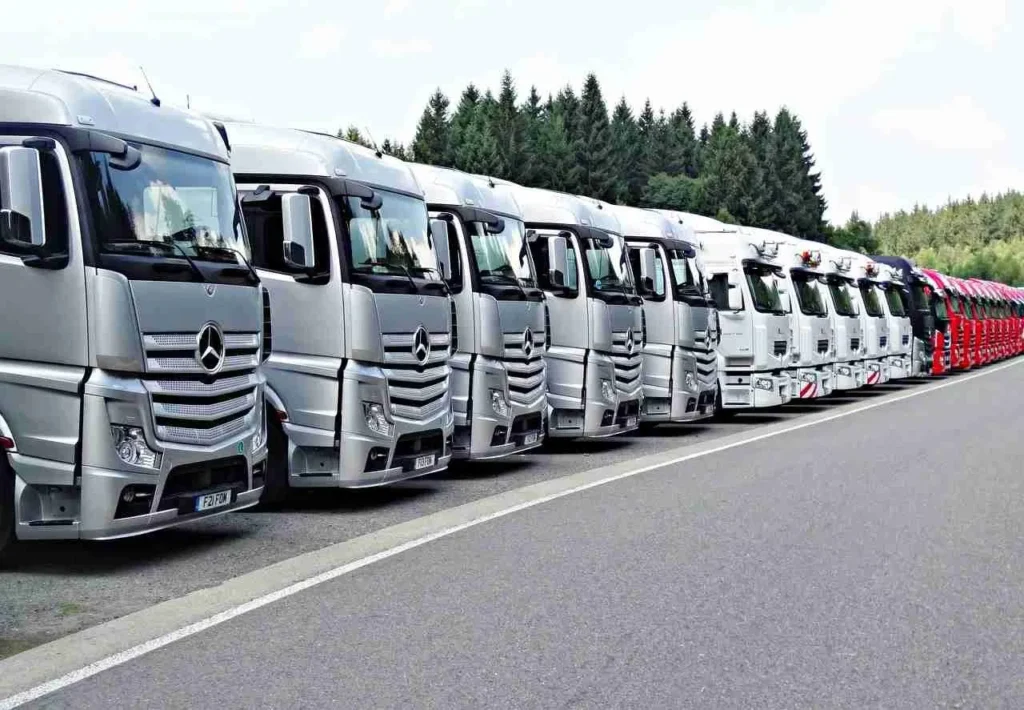
If you’ve driven anywhere near the M8 or M74 lately, you’ve probably noticed something: there are a lot of trucks. And we’re not just talking about the occasional supermarket delivery. Glasgow has quietly, or maybe not so quietly, given the engine noise, morphed into the logistics beating heart of Scotland.
From the sprawling warehouses at Eurocentral to the high-tech hubs at Hillington Park, the "Logistics Golden Triangle" of the North is booming. While other industries are still trying to find their feet in a post-2024 economy, the haulage sector is taking the bull by the horns. But here’s the kicker: all those shiny new Mercedes-Benz and DAF trucks don’t drive themselves.
There is a massive demand for skilled, qualified professionals. If you’ve been stuck in a career rut, staring at the same four office walls, or wondering if there’s more to life than a 9-to-5 that feels like a 5-to-forever, then an LGV course might just be your golden ticket.
In this guide, we’re going to look at why Glasgow is the place to be for logistics, how you can climb the ladder from a van driver to a Class 1 pro, and why getting your hgv training glasgow-style is the smartest move you’ll make this year.
Why Glasgow? The Strategic Hub of the North
Glasgow isn’t just a great place for a night out or a stroll through Kelvingrove Park; it’s a strategic powerhouse. Because the city sits right on the confluence of the M8, M73, and M74, it serves as the primary gateway for goods moving from the south of England up to the Highlands, the Islands, and even over to Ireland via the Clydeport maritime links.
According to recent industry data, the Glasgow-Edinburgh central belt is home to the highest concentration of 3PL (third-party logistics) providers in the country. This means that whether it’s e-commerce giants, food and drink distributors (hello, Scotch whisky exports!), or construction materials, they all pass through our neck of the woods.
For you, this translates to one thing: job security. While some sectors are volatile, the need to move goods is a constant. By securing your hgv licence scotland, you aren't just getting a permit to drive; you’re gaining an entry pass into a vital, growing infrastructure that keeps the country running.

Choosing Your Path: Class 1 vs. Class 2 HGV Training
One of the most common questions we get at HGV Training Glasgow is: "Which licence do I actually need?" It’s a bit like choosing between a mountain bike and a motorbike: both will get you there, but one has a lot more power and requires a bit more finesse.
Class 2 HGV Training (Category C)
This is typically where most people start. A Class 2 licence allows you to drive "rigids": vehicles over 3,500kg with a cab and trailer permanently joined together. These are the workhorses of the city. Think of the big supermarket delivery trucks or local construction lorries.
- The Smart Move: If you want to stay local, be home every night for dinner, and navigate the trickier streets of Glasgow’s West End, Class 2 hgv training is a fantastic starting point.
HGV Training Class 1 (Category C+E)
Now, if you want the "big boy" toys, this is it. A Class 1 licence lets you drive "artics" (articulated lorries). These are the massive rigs with a separate tractor unit and trailer.
- The Career Leap: This is where the higher salaries live. If you’re interested in long-haul "trunking" across the UK or even international routes, hgv training class 1 is the ultimate goal.
Navigating the Course: How to Pass First Time
We get it: the idea of a "test" can make even the toughest person break out in a cold sweat. But here’s the secret: passing isn’t just about being a good driver; it’s about being a prepared driver. Our instructors at HGV Training Glasgow have seen it all, and they’ve helped thousands of students get that pass certificate on their first try.
1. Master the Theory and Hazard Perception
Before you even touch a steering wheel, you need to nail the theory. It’s more than just knowing what a "No Entry" sign looks like. You’ll need to understand tachograph rules, weight limits, and bridge heights.
- Pro Tip: Use the study materials we provide! Practice the hazard perception tests until you can spot a developing hazard before the camera even moves. Navigating these tests is the first hurdle.
2. The HGV Medical Assessment
Safety first, always. Before you can get your provisional licence, you’ll need a medical assessment. This isn’t a fitness test for the Olympics; it’s just to ensure your eyesight is sharp and you don’t have any underlying conditions that could make driving a 44-tonne vehicle dangerous.
3. Practical Instruction: Patience is a Virtue
Our instructors aren't just teachers; they're mentors. They know that driving an LGV feels different: the brakes are air-powered, the mirrors show you a different world, and you have to "swing wide" on those Glasgow roundabouts. The key to a first-time pass is listening to the small adjustments your instructor suggests.

From Van Driver to Class 1 Professional
Many of our students start as delivery van drivers. They’re used to the road, they know the Glasgow shortcuts, and they’re tired of the frantic "multi-drop" lifestyle where you’re delivering 100 parcels a day for a pittance.
Moving up to a professional LGV role is a major career upgrade. It’s not just about the bigger paycheck (though that’s a nice perk); it’s about the professional respect, the better working conditions, and the ability to specialize. You could find yourself hauling temperature-controlled goods, working in hazardous materials (ADR), or even moving high-value cars.
The transition is smoother than you think. Because you already have road experience, you just need to adapt your spatial awareness to a larger vehicle. It’s about "levelling up" your existing skills to meet the high standards of the Scottish logistics industry.
The "Side Quests": CPC and Career Maintenance
Once you have your licence, you can't just set it and forget it. To drive professionally, you need your Driver CPC (Certificate of Professional Competence). This is a legal requirement that involves 35 hours of periodic training every five years.
Think of it as keeping your skills sharp. CPC training covers everything from the latest safety regulations to fuel-efficient driving techniques. In an era where "going green" is vital, learning how to drive an AFV (Alternative Fuel Vehicle) or simply improving your fuel economy makes you a highly desirable asset to any logistics firm.

Why Train With Us?
There are plenty of hgv courses scotland wide, but there’s a reason people travel to Glasgow to train with us.
- High Pass Rates: Our stats speak for themselves. We focus on quality instruction, not just "getting people through."
- Modern Fleet: You’ll be learning on vehicles that are representative of what you’ll actually be driving in the real world.
- Job Assistance: We don’t just hand you a certificate and say "good luck." We have deep ties with the local haulage industry and assist our drivers in finding full-time employment.
- Tailored Plans: Whether you’re a complete novice or an experienced driver looking to upgrade, we tailor the lessons to your pace.
Conclusion: Get on the Road to a New Career
The logistics scene in Glasgow isn’t just a trend; it’s the backbone of the Scottish economy. As we look toward the future, the demand for professional drivers is only going to grow. Whether you’re looking for the freedom of the open road or the stability of a local distribution role, the journey starts with the right training.
Don’t let another year pass by wondering "what if." Take control of your professional future. Get your medical booked, nail that theory test, and get behind the wheel. The road is calling, and Glasgow is the perfect place to start your engine.
Ready to start your lgv course? Contact HGV Training Glasgow today and let’s get you on the road to a new career.