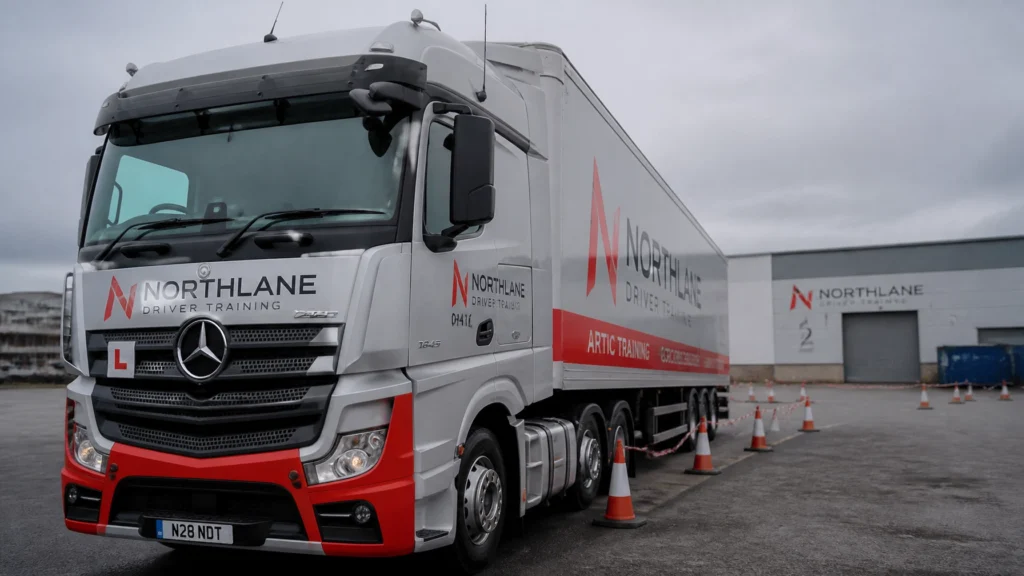
If you’ve spent any time on the M8 recently, you’ve probably noticed two things: first, that traffic is a constant of the universe, and second, that the road is absolutely teeming with heavy goods vehicles. From the massive distribution centres in Motherwell to the bustling docks at Grangemouth and the logistics hubs surrounding Glasgow Airport, the haulage industry is the literal heartbeat of the Scottish economy.
But here’s the kicker: those trucks aren't driving themselves (at least not yet). There is a massive demand for skilled drivers in the Central Belt, and if you’re looking to trade a dead-end desk job for the freedom of the open road and a paycheck that actually reflects your effort, you’ve come to the right place. Welcome to LGV Glasgow 101. Whether you’re a complete novice or a van driver looking to level up, this guide will show you how to take the bull by the horns and launch a successful career in heavy lifting.
Decoding the Alphabet Soup: C vs. C+E
Before you dive into an LGV course, you need to understand the jargon. You’ll hear people use HGV (Heavy Goods Vehicle) and LGV (Large Goods Vehicle) interchangeably: don't sweat it, they mean the same thing in the eyes of the law. What actually matters are the categories:
- Category C (Class 2): This is the entry-level heavy hitter. It allows you to drive "rigid" vehicles over 3,500kg. Think of the big delivery trucks you see dropping off stock at supermarkets or refuse collectors. It’s the perfect starting point for most drivers.
- Category C+E (Class 1): The gold standard. This allows you to drive articulated lorries (the ones that "bend" in the middle) or a wagon-and-drag combination up to 44 tonnes. If you want the big trunking jobs and the highest salary potential, hgv training class 1 is your end goal.
The smart move? While some people go straight from a car licence to Class 1, many find it easier to master the Class 2 first. It builds your confidence on the road before you add a 40-foot trailer into the mix.
The Roadmap: 5 Steps to Your Licence
Becoming a professional driver isn't just about showing up and driving a big rig. It’s a regulated process designed to ensure you’re safe, healthy, and competent. Here is the pragmatic path forward:
1. The HGV Medical Assessment
Safety first. Before you even touch a steering wheel, you need a D4 medical assessment. A doctor will check your eyesight, blood pressure, and general health to ensure you're fit to handle a multi-tonne vehicle. It’s nothing to be scared of, but it is vital. Pro tip: If you have a pre-existing condition, get it under control before the appointment to avoid delays.
2. Getting Your Provisional
Once you have your medical, you’ll send off your D2 and D4 forms to the DVLA to get your provisional entitlement added to your car licence. This is the green light to start your hgv training glasgow.
3. Conquering the Theory and Hazards
This is where many people get stuck, but it doesn’t have to be a roadblock. You’ll need to pass a multiple-choice theory test and a hazard perception test.
At HGV Training Glasgow, we provide the study materials you need to breeze through this. Don't just skim the book; use official-style question banks and aim for 95% in your mocks. The hazard perception test is about timing: you need to spot developing hazards early without "machine-gunning" the mouse button.
4. Practical In-Vehicle Training
This is the fun part. You’ll get behind the wheel of a modern Mercedes-Benz or DAF truck and learn the ropes with a patient, DVSA-registered instructor. For class 2 hgv training, you’re looking at about 16 hours of in-vehicle time. For Class 1, it’s 25 hours. We focus on real-world scenarios: navigating Glasgow’s unique road layouts, mastering tight turns, and perfecting that all-important reverse.
5. The Final Test and CPC Module 4
After the driving test comes the Driver CPC Module 4 (Practical Demonstration). This isn't about driving; it’s about showing you know how to secure a load, perform daily walk-around checks, and handle emergency situations. Once you pass this, you’re officially a professional driver.
Tips for Passing Your Practical Test First Time
We pride ourselves on our high first-time pass rates, but a lot of that comes down to the mindset you bring to the cab. Here’s how to stay on the road to success:
- Mirrors, Mirrors, Mirrors: In a truck, your mirrors are your best friends. If an examiner sees you make a move without a clear check, it’s a fail. Develop a "constant scan" habit.
- Respect the "Swing": Especially during Class 1 training, you have to account for the trailer's "cut-in" on roundabouts. Take your time, use the space, and don't be afraid to take a wider line if the infrastructure allows it.
- Nail the Reverse: It’s the part everyone dreads. In the test, you’ll have to reverse into a designated bay. The trick is small steering corrections. If you over-steer, you’ll chase the trailer all day. Listen to your instructor’s reference points: they are there for a reason.

The Importance of CPC Periodic Training
Passing your test is just the beginning. To keep your licence valid for "hire or reward" (aka getting paid to drive), you must complete 35 hours of CPC periodic training every five years.
Think of this as staying sharp. It covers everything from updated road safety rules to fuel-efficient driving and driver well-being. It’s not just a legal requirement; it’s a smart move to ensure you’re always at the top of your game and aware of the latest industry standards.
Why Glasgow is the Ultimate Hub for Logistics
Glasgow isn't just a great place for a night out; it’s the logistics capital of Scotland. Its location is strategic: sitting at the intersection of the M8, M74, and M80, it serves as the gateway for goods moving between the Highlands, the south of the border, and the busy ports.
Companies are constantly looking for drivers with an hgv licence scotland. Because of this high demand, starting your career here means you won't just find a job: you'll have your pick of them. Whether you want to be home every night doing local deliveries or you fancy the "tramping" life of long-haul Class 1 work, Glasgow is the place to be.
Career Progression: From Van Driver to Class 1 Professional
The beauty of the haulage industry is the clear path forward. Many of our students start by getting their C1 (7.5-tonne) or Class 2 licence. They get a few years of experience, earn a solid living, and then come back to upgrade to Class 1.
Moving from a van to a Class 1 articulated lorry is like moving from a bicycle to a jet plane: the responsibility is higher, but so are the rewards. The pay gap between a standard delivery driver and a specialized Class 1 driver can be thousands of pounds per year. Plus, with your hgv courses scotland qualification, you have a skill that is practically recession-proof.

Why Choose HGV Training Glasgow?
You have options when it comes to training, but we like to think we offer something a bit different. We aren't just a driving school; we are a partner in your career.
- High Pass Rates: Our instructors are seasoned pros who know exactly what DVSA examiners are looking for.
- Modern Fleet: You’ll train in vehicles that are actually used in the industry today.
- Job Assistance: We don't just hand you a certificate and say "good luck." We assist our drivers in securing full-time employment within the haulage industry.
- Tailored Plans: We know everyone learns at a different pace. Our lesson plans are adjusted to suit your individual skill level, ensuring you feel confident before you head to the test centre.
Ready to Get on the Road?
The transportation industry is changing. With the rise of Alternative Fuel Vehicles (AFVs) and new safety regulations, there has never been a more exciting (or lucrative) time to join the ranks of professional drivers.
Don't let another year pass by in a job that doesn't go anywhere. Take control of your professional future. Whether you need Class 1, Class 2, or your initial CPC, we are here to help you get moving.
Check out our full range of courses and pricing or get in touch with us today to start your journey.